The Türkiye Event Market: A Destination-Intelligence Guide for Promoters and Rights-Holders
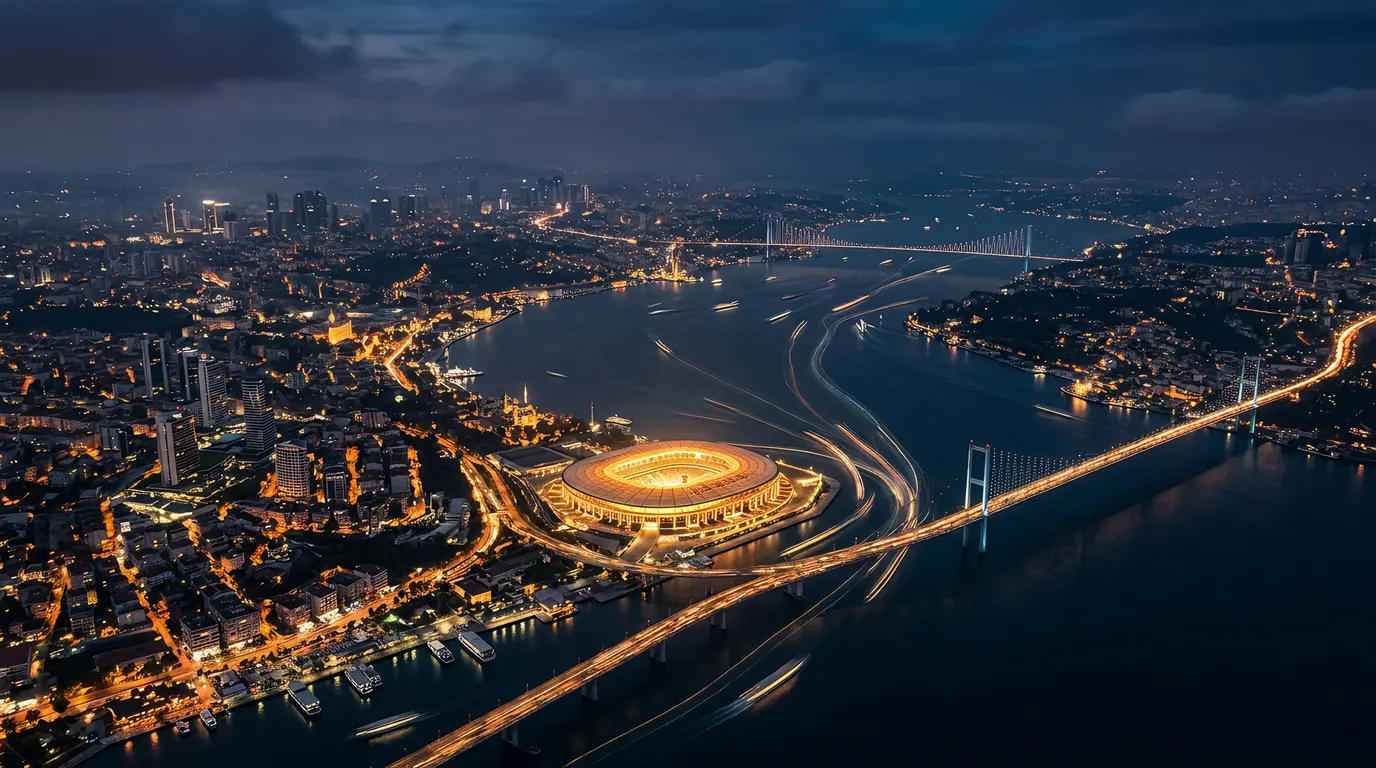
Yes, Türkiye is a strong market to launch an international event in 2026, and you enter it through Istanbul, a local promoter partnership and a currency plan. Ticket revenues are growing around 30% a year, audience depth rivals any European market, and hard-currency budgets stretch further than almost anywhere in Europe. The catch: lira volatility and a two-season calendar punish organizers who plan as if Türkiye were Germany. This guide applies our seven-factor market selection framework to the ground reality.
Part of Choosing Your Next Event Market: A Data-Driven Framework for Comparing Destinations
Verified as of September 2026
Why Türkiye, and why now?
Because supply is finally chasing demand instead of the other way around. According to the IQ Magazine International Ticketing Report 2026, Türkiye’s leading ticketer reports ticket revenues rising roughly 30% year on year, driven by stadium concerts, festivals and outdoor programming, and international touring volume is finally matching the local appetite.
The industry has noticed. In June 2026, Turkish and UK live-music executives gathered in London under a blunt banner: “We want to see more artists in Türkiye.” Pollstar’s coverage captured it: veteran agent John Giddings listing The Rolling Stones, U2, Madonna and Rihanna among acts he has already brought to the country, and Turkish promoters pushing for routing beyond one-off stadium plays. When a market’s buyers are lobbying agents in London, the demand question is largely answered.
How deep is the audience demand in Türkiye?
Deep enough to fill arenas on domestic demand alone, with a tourism layer on top. Istanbul’s metropolitan population exceeds 16 million, larger than most European countries’ total addressable event audience in a single city. Zümrüt Arol, CEO of Istanbul-based producer-promoter BKM, told the London gathering that Türkiye has “one of the youngest and most engaged audiences in Europe” and that live entertainment “is not viewed as an occasional luxury; for many people it is an important part of social life and culture.”
The demographics back the quote: as our market-selection analysis noted, 44.2% of the population is under 30, the deepest under-30 pool of any market we have scored. And the export signal is real: the same London event showcased Turkish pop act Manifest, with Giddings declaring “we’re going to make T-pop happen.” Markets that export culture reliably import touring.
Then add tourists. Per TÜİK figures reported by Hürriyet Daily News, Türkiye received 63.9 million visitors in 2025 and earned 65.2 billion US dollars in tourism income; Istanbul alone welcomed 18.97 million foreign tourists and Antalya more than 16 million. For promoters, that is a hard-currency secondary audience already in town, bookable through international distribution channels rather than domestic media.
The honest caveat: that audience earns in lira. Domestic purchasing power is squeezed by inflation, so pricing depth is real in Istanbul’s premium segments and thinner elsewhere. Ticket scaling in Türkiye is a craft, not a copy-paste from your last European on-sale.
When should you schedule? Türkiye runs on two seasons
Plan around a summer open-air season from roughly May to September and an indoor arena season from October to April. Miss the split and you are marketing against the calendar itself.
- Open-air season (May–September). Festivals, stadium concerts and coastal amphitheatre programming dominate. Istanbul, Izmir and the Aegean-Mediterranean resort belt carry the calendar; Antalya’s resort audience peaks with the tourism high season.
- Indoor season (October–April). Arena, theatre and performing-arts-centre programming takes over, concentrated in Istanbul and Ankara. This is the window for international arena tours routing out of Europe.
Two overlays matter. First, the Ministry of Culture and Tourism runs the Türkiye Culture Route Festival, grown since 2021 into a multi-city national programme spanning Istanbul, Ankara, Izmir, Antalya and other host cities, a source of dates and audiences, but also of calendar congestion in its host weeks. Second, Ramadan reshapes GCC calendars far more than Türkiye’s, which keeps programming through the month at reduced intensity, useful counter-cyclical routing if you operate in both regions.
What does the venue landscape look like, city by city?
Istanbul is the market; the other cities are the expansion thesis. The IQ Global Arena Guide 2026 describes an arena market anchored by Istanbul, and promoter Nick Hobbs of Charmenko told the London gathering that international touring still centres almost exclusively on Istanbul, a concentration Turkish promoters are actively trying to dilute.
Istanbul
Full capacity ladder. Sinan Erdem Dome is the country’s largest indoor arena at around 16,000; Ülker Sports and Event Hall holds around 13,000; Volkswagen Arena offers a mid-size room at just over 5,000; and Zorlu PSM, 3,900 capacity, described in the Global Arena Guide as the city’s most technically advanced indoor venue and “Istanbul’s gateway for international alternative and electronic touring”, anchors the premium theatre tier. Above them sit stadium options, including Rams Park and the Atatürk Olympic Stadium, plus large open-air festival grounds.
Ankara
The capital offers a roughly 10,000-capacity arena (Ankara Arena), substantial congress infrastructure and one of the country’s largest student populations, a natural second date for arena tours and a strong market for domestic headliners. Political-season sensitivities affect open-air permitting more here than on the coast.
Izmir
Türkiye’s third city leans open-air: a deep summer amphitheatre and festival tradition, an indoor sports hall around 10,000 capacity, and an Aegean catchment that supports its own festival circuit. Strong for summer routing; thinner for winter arena plays.
Antalya
A tourism machine of more than 16 million annual visitors, with resort, congress and open-air infrastructure to match. The audience is substantially international and hard-currency, but transient, so demand tracks the tourism calendar. Treat it as a seasonal residency and special-event market, not a standard tour stop.
What will it cost? The lira reality
Türkiye is one of the cheapest places in Europe to produce a show in hard currency, and one of the hardest places to hold a budget still. Local production, crew, staging, security, venues and media are priced in lira, so a dollar or euro budget buys materially more than in Western Europe. That is the advantage. The volatility is the tax on it.
The macro picture, per ING’s analysis of official inflation data: annual inflation ran near 31% at end-2025, with ING expecting around 22% in 2026, and the central bank signalling a managed exchange-rate path with gradual real appreciation of the lira. Two operational consequences follow. First, lira costs re-price constantly, a supplier quote from March is fiction by September, so build indexation or short validity windows into every local contract. Second, real appreciation means the hard-currency discount is slowly shrinking: the cost case for entering is strongest now, not in three years.
Manage the revenue side the same way: tickets sell in lira to a lira-earning audience, so agree conversion mechanics and hedge the window between on-sale and settlement. Note also the fiscal load our framework analysis flagged, VAT on tickets plus withholding tax on non-resident performer fees compounds quickly; model the show gross-to-net with Turkish tax counsel before you confirm the offer, not after.
Which marketing and distribution channels actually move tickets?
Streaming and social, with everything else as support. Türkiye’s discovery pipeline is streaming-led, the IQ ticketing report highlights ticketing integrations with Spotify, Shazam and Apple Music as a defining feature of the market, and the under-30 majority lives on Instagram, TikTok and YouTube. Out-of-home still matters in Istanbul, and brand, telco and bank partnerships routinely subsidise campaigns and instalment-based ticket offers.
Distribution is the strategic decision. Domestic primary ticketing is concentrated among a handful of local platforms, several tied to specific venues or leagues, so your local promoter’s existing relationships usually determine the default route. The overlay international promoters miss: Istanbul’s 19 million foreign tourists are invisible to domestic channels. Reaching them requires international, multi-language, multi-currency distribution and performance marketing built for event audiences, a channel mix closer to a Gulf on-sale than a domestic Turkish one.
What is the partner and regulatory pathway?
Enter with a local promoter, clear immigration and tax early, and treat permits as lead-time items. The pathway in four steps:
1. Secure a local promoter or co-promoter
Established Istanbul promoters and producers, the BKM and IKSV ecosystem visible in the Pollstar coverage is indicative, control venue relationships, municipal know-how and media buying power that no market entrant replicates in a first season. Co-promotion is the standard structure for international entrants.
2. Clear work authorization for touring personnel
Foreign nationals working in Türkiye fall under International Labour Force Law No. 6735, administered by the Ministry of Labour and Social Security’s Directorate General of International Labour Force. The ministry operates a work-permit exemption regime for defined short-duration activities under Article 48 of the law’s implementing regulation, verify the current exemption table for artistic activity against your show dates, and file for full permits where the exemption windows do not cover your crew.
3. Model the tax stack before confirming the offer
Fees paid to non-resident artists and their loan-out companies are subject to Turkish withholding tax, tickets carry VAT, and municipalities levy an entertainment tax on paid admissions. Rates change and double-tax-treaty relief for performers is narrow, so have Turkish tax counsel run the full gross-to-net before the deal memo is signed.
4. Sequence venue, municipal and security permissions
Open-air and public-space events require municipal and governorate-level permissions with real lead times; established venues handle much of this through their own licences. Your local partner owns this workstream, your job is to protect the timeline upstream by locking dates early.
Entry checklist: signed co-promotion agreement; work permits or Article 48 exemptions confirmed for every touring foreign national; withholding, VAT and municipal entertainment tax modelled gross-to-net; venue contract with lira indexation terms; currency hedge covering on-sale to settlement; distribution plan covering both domestic channels and international tourist demand.
How does Türkiye compare with the GCC markets?
Türkiye is a volume market; the GCC is a margin market. Run them as complements, not alternatives. Saudi Arabia offers government-backed demand programmes and hard-currency spending power, our Saudi Arabia event market guide covers that machinery, while the UAE provides mature digital permitting and a premium international audience, detailed in our UAE event market intelligence briefing. Türkiye counters with something neither can match: tens of millions of domestic fans and production costs at a fraction of Gulf rates.
The calendars interlock almost perfectly: Türkiye’s open-air peak (May–September) is the Gulf’s off-season, and the Gulf’s October–March peak is Türkiye’s indoor season. A Gulf-based promoter can keep a production working year-round across the corridor, the routing logic of our GCC multi-market ticketing playbook applies across borders, and the same thinking extends to Egypt, covered in our Egypt event market guide. For GCC promoters, Türkiye is a three-to-four-hour flight with a fanbase the size of several Gulf markets combined.
Where webook.com fits
webook.com runs ticketing and distribution for some of the world’s most demanding event calendars, Riyadh Season, Formula 1, UFC and WWE events among them, serving 18M+ users, processing 40M+ tickets and reaching buyers in 180+ countries. For a Türkiye entry, that means international distribution that captures the tourist and diaspora demand domestic channels miss, multi-currency ticketing that takes the FX problem out of the checkout, and commercial teams that structure cross-border on-sales across the Gulf–Türkiye corridor.
If Türkiye is on your expansion shortlist, our commercial consultation team will pressure-test the market case with you, seasonality, venue routing, tax load, distribution plan, before you commit capital. Talk to our commercial team.
Frequently asked
Is Türkiye a good market to launch an international event in 2026?
Yes, for organizers who plan for currency volatility. Ticket revenues are growing around 30% annually, Istanbul offers 16 million residents plus 19 million foreign tourists, and hard-currency production costs are among Europe’s lowest. Enter through Istanbul with a local co-promoter and a hedge on the on-sale-to-settlement window.
What is the best time of year to stage an event in Türkiye?
May to September for open-air shows and festivals, October to April for arena and theatre programming. Istanbul works in both seasons; Izmir and Antalya are strongest in summer, Ankara in the indoor season. Check Culture Route Festival host weeks for calendar congestion in your target city.
Do foreign artists need a work permit to perform in Türkiye?
Foreign performers fall under International Labour Force Law No. 6735. Short-duration artistic activity can qualify for a work-permit exemption under Article 48 of the implementing regulation; longer engagements need full permits from the Ministry of Labour and Social Security. Confirm the current exemption table against your dates before contracting.
How do promoters manage lira volatility on a Türkiye show?
Three mechanisms: keep local-cost quotes on short validity or lira indexation; hedge the window between on-sale and settlement so lira revenues convert at a known rate; and capture hard-currency demand from tourists through international distribution. Budgets built on a single exchange-rate assumption do not survive a Turkish production cycle.
Which Turkish city should an international promoter enter first?
Istanbul, without serious debate, it holds the full venue ladder from 3,900-capacity Zorlu PSM to stadiums, the deepest audience and the promoter ecosystem. Ankara is the natural second arena date, Izmir the summer open-air play, and Antalya a seasonal, tourism-driven special-events market.
Let's build your event's ticketing
Tell us about your event and what you want it to achieve, and we'll put a dedicated team on the setup that fits.
Get started now