How to Forecast Ticket Demand Before You Commit: A Working Framework for Promoters and Venues
You forecast ticket demand by combining three signals: comparables (what similar events actually sold in similar markets at similar prices), market signals (streaming, search and social interest, seasonality, the competing calendar) and instrumented demand (registrations, waitlists and presales you measure yourself). Together they produce a range, not a number. That is the point: a forecast does not predict the future, it prices your risk before you commit to a venue, a tier structure and a marketing budget.
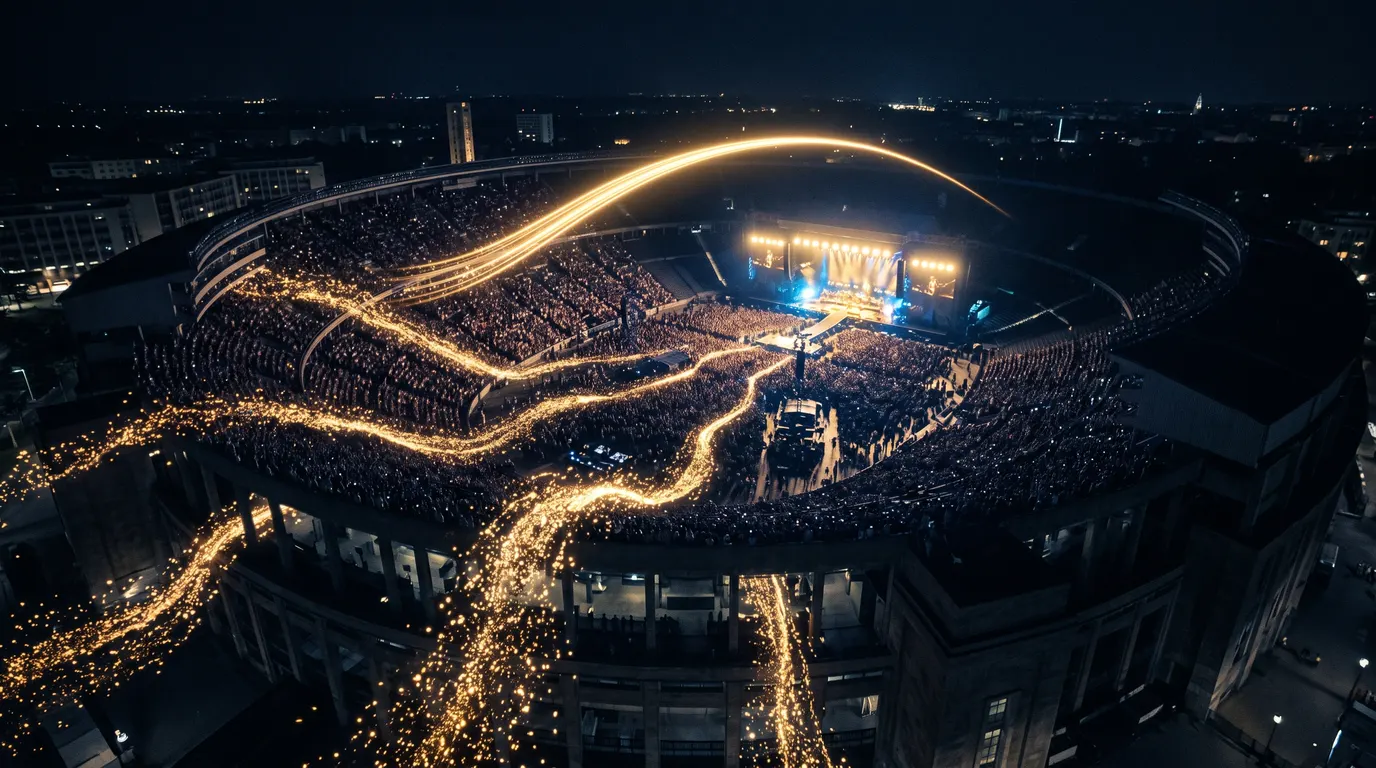
We call this the three-signal demand read. Build it in a week, run it before every commitment, and let it set venue size, ticket tiers, release strategy and spend gates.
Forecasting is risk pricing, not prediction
Ask how many tickets you will sell, and any honest answer is a range. Ask what you can afford to be wrong by, and you are doing the real work. A useful forecast establishes a floor you can survive, a base case you can plan against and an upside you can option, then forces every commitment to clear the floor, not the dream.
The market punishes guessing more than it used to. Pollstar's mid-year 2025 business analysis put the top 100 worldwide tours at 2.81 billion dollars in grosses, down 8.4% year on year, while average gross per show rose 24.9%, demand concentrated into fewer, bigger events while the middle of the market thinned. Longer term, Goldman Sachs still expects global music revenue to nearly double, from 105 billion dollars in 2024 to roughly 200 billion by 2035. Growth is real; it is just unevenly distributed. A growing market with concentrating demand is precisely where sizing an event on instinct gets expensive.
What does guessing wrong actually cost?
Oversizing costs you atmosphere, artist relationships and price integrity. Undersizing costs you revenue you never see and hands the margin to resellers. Both failures are decided months before the on-sale, which is why the forecast has to exist before the venue contract is signed.
A 10,000-capacity arena at 55% looks and sounds half empty. The artist's team remembers it, the audience films it, and the discounting you run to fill it teaches your market that waiting beats buying. Run the other direction and an undersized room sells out in minutes, which feels like triumph and is actually a pricing failure: the demand you did not house gets monetized by the resale market instead of you.
Signal 1, comparables: what did similar events actually sell?
A comp set is five to ten past events that match yours on four dimensions: event class, market, price band and recency. Take the median as your baseline, never the best case, the best case is marketing; the median is evidence.
- Event class: same draw tier and genre. An arena pop act and a theatre comedy run are different products, even in the same city.
- Market: the same city where possible; otherwise a city that matches on population, income and event supply.
- Price band: comps priced 40% above your plan tell you little about volume at your price.
- Recency: prefer the last 12 to 24 months; demand curves from 2023 describe a different market.
Your richest comp source is your own history, one more reason to treat every past event as data; the post-event analytics framework covers how to structure it. Beyond that: venue partners' histories, settlement data from co-promoters, grosses published in trade press. Document every comp's source and adjust transparently. A comp set assembled to flatter the project is worse than none.
Signal 2, market signals: does this market want this event now?
Market signals never produce a number; they move one. Use them as a documented adjustment to the comp baseline: interest data, streaming, search, social, relative to your comp markets, plus seasonality and the competing calendar around your date.
For music, the artist's streaming and social footprint in the target city, compared against the same artist's footprint in your comp cities, is the cleanest read: if listening in the target market runs 20% below the comp markets, start your range 20% lower. Check the direction of search interest over the past year, not just its level. Then the calendar: school holidays, weather seasons, religious observances, and every event within three weeks either side that competes for the same wallet. Keep the adjustments few, named and written down, putting this kind of signal reading on one screen is what webook.com's event data and analytics layer is built for.
Signal 3, instrumented demand: make buyers count themselves
Instrumented demand is the only signal measured on your actual event: registration presales, waitlists and virtual-queue entry counts. It converts interest into observable behaviour before you commit, a census of demand instead of a survey of it.
A registration presale, sign up for access before the public on-sale, is the cheapest demand instrument that exists. Ten thousand registrations are not ten thousand buyers, but against your own historical registration-to-purchase conversion they become a hard number. Waitlists do the same after a tier sells out: they measure the demand you did not house. And at on-sale, a virtual queue counts every person who turned up to buy, including everyone who did not get a ticket, turning your on-sale into a complete demand census rather than a sales report.
This is where scale shows. With 40M+ tickets processed and 20M+ users across 180+ countries, webook.com runs this demand layer daily, the same registration, waitlist and queue instrumentation a promoter needs to read demand before committing to the next date.
How do you convert the read into decisions?
The three signals produce a floor, a base and an upside. Commit to the floor, plan the base, option the upside. Four decisions follow directly: venue size, tier architecture, release strategy and spend gates.
- Venue size: choose the room where the floor scenario still reads as a healthy house, roughly 70% or better. Buy upside as options (a second show, a standing configuration), never as empty capacity.
- Tier architecture: structure tiers so the floor scenario sells out your lower-risk inventory and the upside is captured in premium tiers, the ticket pricing architecture guide covers the mechanics.
- Release strategy: open with less than full capacity visible. Holdbacks released against real sales data beat a big room selling slowly in public.
- Spend gates: release marketing budget in tranches tied to demand thresholds, presale conversion, week-one velocity, not to calendar dates.
An illustrative read, numbers simplified: a promoter weighs an international act in a new city. The comp-set median is 6,000 tickets. Streaming and search interest run about 20% below the comp markets, so the working range becomes 4,800 to 6,000. A registration presale gathers 10,000 sign-ups; at the promoter's historical 25% to 35% conversion, that implies 2,500 to 3,500 presale purchases, mid-range, not above it. Decision: the 5,000-capacity room, not the 8,000, with a holdback that only releases if presale conversion beats 35%.
When should you kill, downsize or upsize?
Decide the thresholds before the on-sale, while you are still rational. A kill gate, a downsize path and an upsize trigger, each tied to instrumented demand at a named date, turn the worst weeks of a slow campaign into execution instead of argument.
- Kill or postpone: if instrumented demand at the gate date implies a final house below your survivable floor, stopping early is the cheapest version of that decision you will ever get.
- Downsize: a smaller configuration or room protects atmosphere and price integrity; closing a tier beats discounting one.
- Upsize: when queue and waitlist data show demand at a multiple of capacity, add shows rather than stretch the room, and prepare the on-sale for load, because excess demand is exactly where high-demand on-sales fail.
Through the campaign, track daily sales against the forecast curve, not against last week. The Event Reporting App exists so that read is live on your phone rather than in Friday's export.
Price the risk before you sign
Promoters and venues rarely miss because demand was unknowable; they miss because the commitment came before the evidence. The three-signal demand read is how the evidence arrives first. webook.com operates this demand layer, registrations, waitlists, virtual queues, live reporting, for organizers across 180+ countries. See how we work with concert promoters, then book a demo to see the instrumentation running on your own next on-sale.
Frequently asked
How accurate can a ticket demand forecast be?
Accurate enough to size decisions, not to name the final count. A disciplined three-signal read produces a floor, a base and an upside; the forecast succeeded if the floor was survivable and the outcome landed inside the range. Treat point-estimate precision as the sign of a weak process, not a strong one.
How do I forecast ticket sales for a first-time event with no history?
Build the comp set from other organizers' events in your market, published grosses, venue histories, trade data, and lean harder on instrumented demand: run a registration presale before you lock the venue. With no conversion history of your own, commit conservatively and treat the first event as calibration.
Do waitlists and registrations really predict ticket sales?
They are the strongest pre-commitment predictor available because they measure behaviour, not stated interest. The link to actual sales is your registration-to-purchase conversion rate, which varies by market, price and event class, so calibrate it from your own past events and re-check it every campaign.
When should I cancel or downsize an event that is selling slowly?
At date gates you set before the on-sale. If instrumented demand at a gate implies a final house below your survivable floor, act then, postpone, move rooms or close tiers. Early action protects cash, artist relationships and price integrity; late discounting damages all three.
Let's build your event's ticketing
Tell us about your event and what you want it to achieve, and we'll put a dedicated team on the setup that fits.
Get started now