Blog and announcements
Guides and strategies for event organizers on ticketing, event marketing, fan engagement, and growth.
 Ticketing
Event Licensing and Permits in Saudi Arabia: Which Authority, Which License, in What Order
Verified as of October 2026 against official Saudi government sources. Licensing requirements change; confirm current rules on the relevant authority’s own portal before you commit dates or budget.
Read more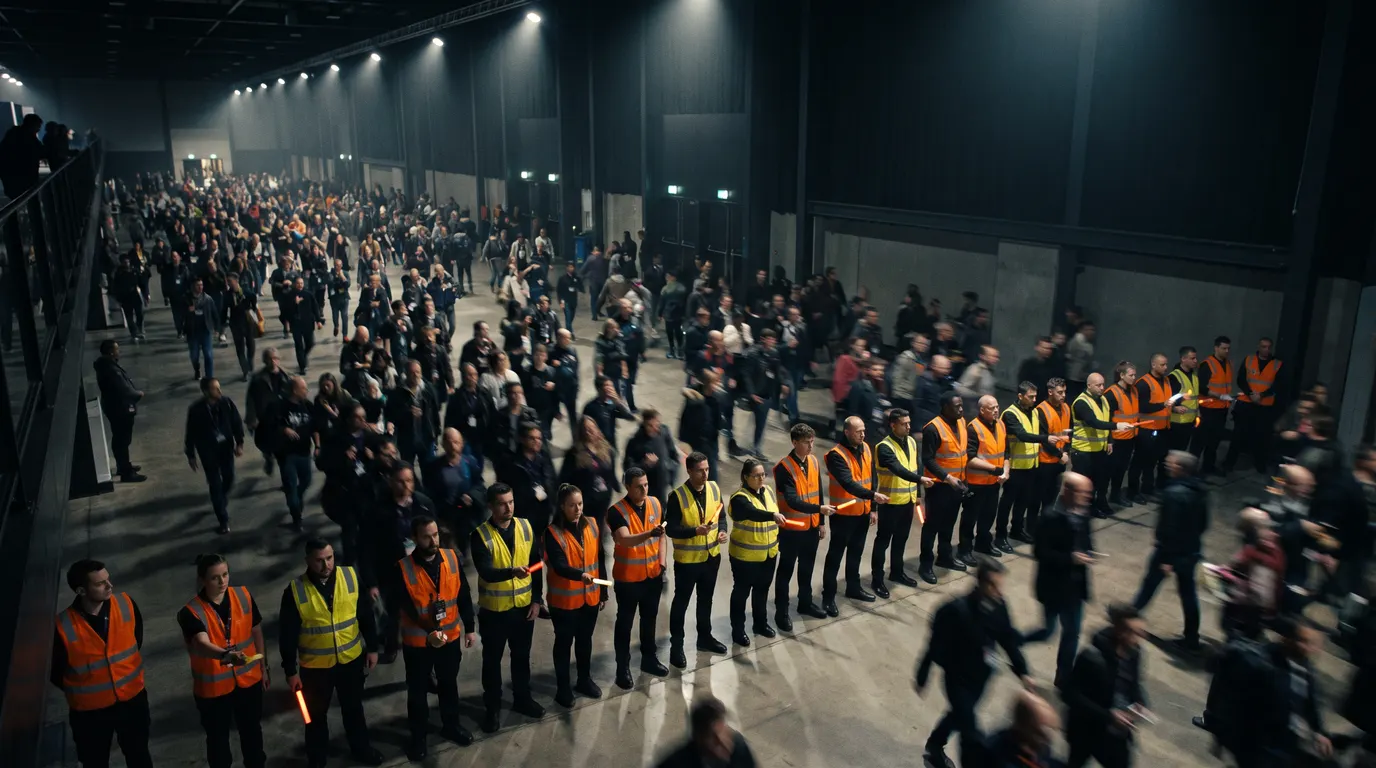 Ticketing
How Many Staff Does an Event Need? A Workforce Planning Framework
How many staff does an event need? Derive the number instead of looking it up. Staff count is the output of three variables: how fast your crowd arrives, which is the arrival curve; how fast each entry lane can process it, which is throughput; and how much supervision the event demands, which is the risk profile. Attendance ratios such as one steward per 250 guests are sanity checks, not planning tools. This framework shows the arithmetic, worked through a 5,000-capacity concert and a 40,000-seat football match.
Read more Ticketing
The Morocco Event Market: A Destination-Intelligence Guide for Promoters, Rights-Holders and Attraction Operators
Yes, Morocco is the strongest market-entry case in North Africa right now, and the window to establish position runs to 2028, not 2030. The country has just delivered a record-breaking Africa Cup of Nations, will co-host the 2030 FIFA World Cup with Spain and Portugal, posted 19.8 million tourist arrivals in 2025, and is commissioning stadiums, high-speed rail and airport capacity years ahead of the tournament. This guide gives promoters, rights-holders and attraction operators the full market read: demand, venues, seasonality, costs, channels, partners and regulation.
Read more Ticketing
The Ramadan and Eid Events Playbook: Timing, Programming and Revenue for the GCC Season
How should a venue, attraction or restaurant plan events and revenue during Ramadan and Eid in the GCC? Run iftar-to-suhoor as a second business day, with its own programming grid, its own price architecture and its own booking flow, and plan Eid as a separate 72-hour demand spike. In Saudi Arabia, the share of card transactions made between 10pm and 4am roughly doubles during Ramadan, from 17.6% to 35%, according to Visa Consulting and Analytics. The demand is certain. What separates operators is whether their calendar, pricing and booking setup are built for it.
Read more Ticketing
Ticketing APIs and Integrations: What to Evaluate Before You Sign a Platform Contract
Before you sign a ticketing platform contract, evaluate six integration surfaces: identity, inventory, payments, access control, data, and distribution. Then test the vendor's sandbox and documentation yourself, and write data egress and exit terms into the contract. Those six surfaces predict the total cost of a platform better than any feature list, because features are what the demo shows, and integration is what your engineering team lives with for the next three to five years.
Read more Ticketing
The Economics of a Concert: How Promoters Budget, Price and Break Even
Concert promoters make money on the spread between net ticket revenue and the full cost of staging a show, talent, production, venue, marketing, transaction costs, taxes and royalties. Most money-losing shows fail on paper weeks before doors open, because the budget quietly assumed that gross equals net. The promoters who survive their third show build the settlement-night statement first, and only then decide whether the show deserves to happen.
Read more