Access Control Modernization for Stadiums, Arenas and Festivals: From Static Tickets to Identity-Aware Entry
Modernize access control in three layers, in this order: credential, validation, data. Replace static barcodes and PDF tickets with dynamic, identity-aware credentials first, a software change that cuts fraud before you spend anything on hardware. Then upgrade validation: readers, offline resilience, lane throughput. Then treat every gate as a data source for operations and commercial teams. We call this the three-layer entry migration, and a venue can run it across one season without ripping out a single turnstile.
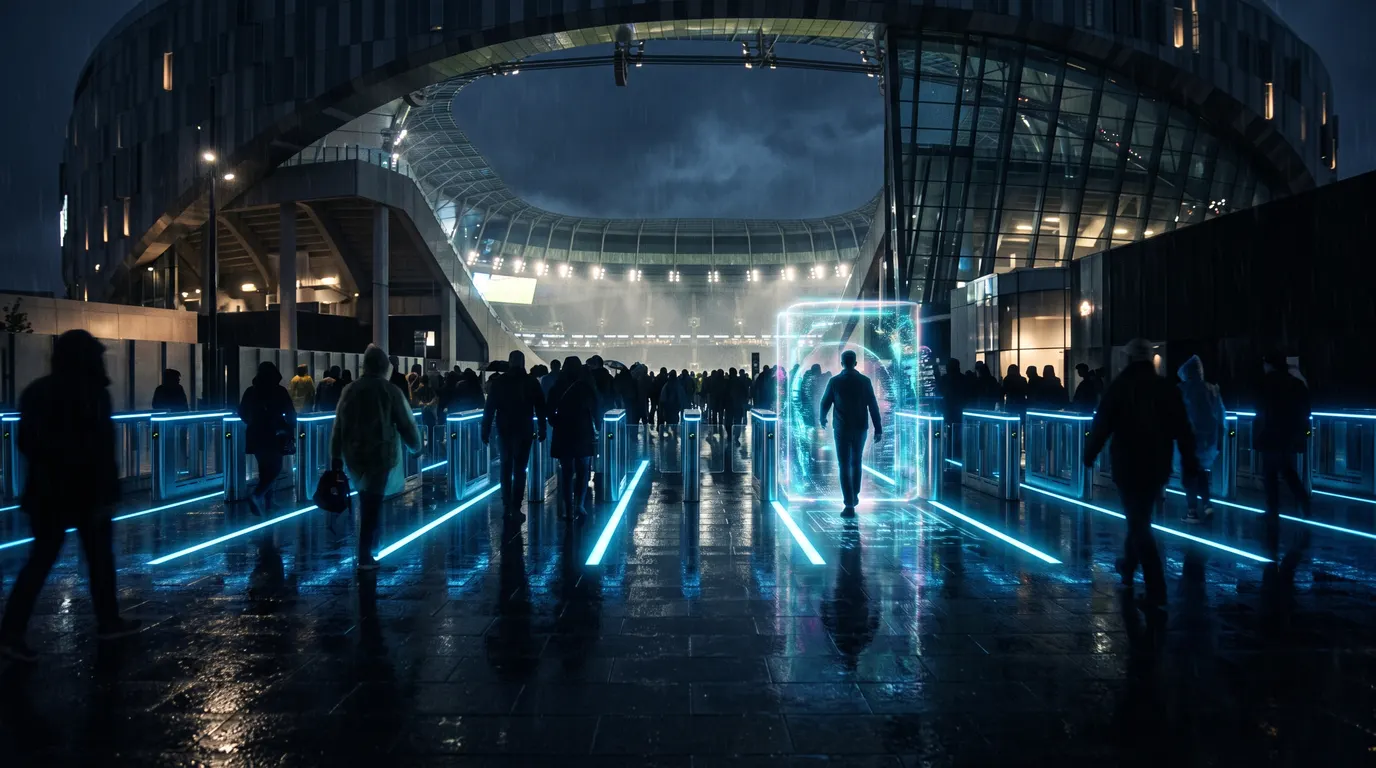
Verified as of October 2026.
What does legacy entry actually cost a venue?
Three things: fraud you absorb, queues you apologize for, and data you never collect. Entry is usually the last system in the building still running on technology from the print era, a static barcode generated at purchase and trusted, unchanged, weeks later at the gate.
Start with fraud. A static barcode is one screenshot away from being a duplicate, and a PDF ticket forwards infinitely. The UK's national fraud reporting service logged around 3,700 gig-ticket fraud reports in 2024, with £1.6 million lost to ticket scams, more than double the 2023 figure, according to the Home Office. Reported scams are the visible edge; every duplicate that reaches a gate becomes your dispute, your delay and your refund conversation, because the fan holding the second copy blames the venue, not the fraudster.
Queues are the second cost. Peak ingress is brutally concentrated: most of a crowd arrives in the final 45 to 60 minutes before the main act or kickoff. Legacy scanning, slow reads, manual checks, no exception handling, fails exactly then, in front of everyone.
The third cost is invisible: zero entry data. A torn stub or a basic barcode scan records that a ticket was used. It does not tell you who entered, when, through which gate, or how that correlates with what they bought inside. Venues price sponsorships, staffing and concessions blind because the gate never became a sensor.
Layer 1, Fix the credential before you touch hardware
The credential layer is where modernization starts because it is software, not construction. A dynamic QR ticket regenerates at short intervals on the holder's phone, so a screenshot or a forwarded copy dies before it reaches the gate. An identity-aware ticket goes further: the credential is bound to a named holder, and it moves between people only through verified transfer, so legitimate sharing survives while anonymous duplication does not, the problem trufan fan protection and verified sharing was built for.
The tier-1 benchmark is now explicit. For the FIFA World Cup 2026, FIFA's official ticketing policy accepts no screenshots and no printed mobile tickets, allows no PDF downloads, and reveals the entry QR code only a few hours before gates open. When the world's largest sports event refuses static credentials outright, the direction of travel is settled.
Two practical notes. First, most QR-capable scanners already in your building keep working, the intelligence lives in the credential and the validation service behind it. Second, credential fraud starts upstream at the on-sale, so pair this layer with bot defense; our teardown on stopping ticket bots and scalpers covers that half of the pipeline. The commercial result of Layer 1 alone: duplicate and counterfeit entry attempts start failing at the gate, before any capital expenditure.
Layer 2, Validation: readers, offline resilience and throughput math
Layer 2 is where hardware decisions happen, and the rule is: match devices to venue shape, design for network failure, and size your lanes with arithmetic rather than hope.
Handheld scanners are cheaper per lane, redeployable mid-event, and right for festivals, temporary perimeters and overflow. Fixed readers on turnstiles or speed gates deliver higher sustained throughput for permanent bowls. Most modern venues end up hybrid: fixed lanes for the main perimeter, handhelds for VIP, accreditation and surge relief.
Offline resilience is non-negotiable. Gate connectivity drops exactly when 40,000 phones converge on one cell. Validation must continue locally, credential lists cached at the gate, scans reconciled when the network returns, duplicates resolved by rule, as covered on our on-ground operations page: scanning, access control and reconciliation as one system.
Now the arithmetic, with stated assumptions. Take a 40,000-capacity stadium where 60% of the crowd arrives in the final 45 minutes: that is 24,000 people, or roughly 533 scans per minute across the whole perimeter. At 10 valid scans per lane per minute, you need 54 active lanes through the peak. And every exception that takes 30 seconds to resolve costs that lane 5 scans, which is why well-run venues pull problems into dedicated exception lanes instead of solving them in the flow.
The gains are measurable in the field. Sunderland AFC's Stadium of Light reported turnstile flow rising from just over 500 to nearly 700 fans per minute after moving to digital tickets, per trade press coverage in 2024. That is a roughly 40% throughput gain with the same concrete and steel.
Layer 3, Data: the gate becomes a sensor
Once credentials are dynamic and validation is digital, every entry is a timestamped, identified event, and the data layer is where the migration pays back. Operationally: live ingress curves per gate per five minutes tell your matchday command where to move staff and security before queues form, and post-event reviews fix gate assignments and opening times for the next date.
Commercially, entry data answers questions venues have guessed at for decades: real no-show rates by ticket type, arrival-time segments for sponsorship pricing, which members actually attend. Feed it into your CRM and activation programs, the fan data activation playbook shows how entry events become revenue decisions. Pair entry identity with payment identity through cashless payments and you get one fan record from gate to concession stand, the full commercial picture of a visit.
The one-season migration plan
Phase the migration by your season calendar, not your procurement cycle. Each phase is independently valuable, so a stalled budget never strands you mid-project.
- Phase 1, pre-season, about six weeks: switch the credential. Dynamic QR on existing scanners, named tickets, verified transfer policy published to fans. Track duplicate-scan rejections and transfer disputes from day one.
- Phase 2, first third of the season: upgrade validation where load is highest. Fixed readers on peak gates, handhelds elsewhere, offline mode tested with the network deliberately cut, one exception lane per gate group. Track valid scans per lane per minute and worst-case queue time.
- Phase 3, rest of the season: stand up the data layer. Ingress dashboards in the command center, post-event reviews after every date, entry data joined to CRM and cashless. Track the share of entries matched to a known fan profile.
A festival compresses the same sequence: credential decisions at on-sale, validation rehearsed before doors on day one, data reviewed between festival days. The order never changes, credential, validation, data.
Build or partner?
Partner, in most cases, and the honest reason is maintenance, not the first build. Dynamic credentials are an arms race: fraud adapts, so the credential service, transfer rules and validation logic need permanent engineering. Building all three layers in-house is a multi-year software program that competes with your core business for budget every season.
A white-label partnership keeps your brand on the ticket, the app and the gate while running layers that are already proven at scale. webook.com operates this stack, 40M+ tickets processed, 20M+ users, with entry operations delivered for organizations including Formula 1, MotoGP, FIFA and the Esports World Cup. If you run a stadium or arena, start with how we work with sports venues; if you want the technology under your own name, see the white-label ticketing and technology partnership model.
Frequently asked questions
Make entry the system that pays for itself
Entry is the last unmodernized revenue system in most venues, and the only one fans physically stand inside while it fails. Start at the credential layer this off-season, measure fraud rejections and lane throughput, and let the data layer fund what comes next. Explore a white-label and technology partnership with webook.com, your brand on the gate, with the three layers already running behind it.
Frequently asked
How should a stadium or festival modernize its access control?
In three layers, in order: credential, validation, data. Replace static barcodes with dynamic, identity-aware tickets first, pure software, immediate fraud reduction. Then upgrade readers and offline resilience where load is highest. Then use entry data for operations and commercial decisions. The whole migration fits one season.
Can we modernize entry without replacing our turnstiles?
Yes. The credential layer is software: dynamic QR tickets validate on most QR-capable scanners already installed. Hardware changes come later, in Layer 2, and only where throughput math demands them, typically the highest-load gates first. Starting at the credential layer delivers fraud reduction before any capital spend.
What is a dynamic QR ticket?
A ticket whose entry code regenerates at short intervals on the holder's phone instead of staying fixed from purchase to gate. Screenshots, forwards and prints go stale before they can be used, which removes the duplication that static barcodes and PDF tickets allow. FIFA World Cup 2026 entry works this way.
How many scanning lanes does an event need?
Divide peak arrivals per minute by valid scans per lane per minute. Example: 24,000 fans in 45 minutes is 533 scans per minute; at 10 per lane, that is 54 active lanes. Add dedicated exception lanes, because one 30-second problem costs a lane 5 scans.
Do handheld scanners work without internet?
They must. Properly designed validation caches credential lists locally at the gate, keeps scanning through connectivity loss, and reconciles entries and duplicates when the network returns. Test it by cutting the network deliberately in rehearsal, peak ingress is precisely when thousands of converging phones degrade gate connectivity.
Let's build your event's ticketing
Tell us about your event and what you want it to achieve, and we'll put a dedicated team on the setup that fits.
Get started now